

111.90.150.1204 Is This a Valid IP Address?
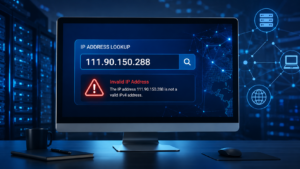
111.90.150.1204 is an invalid IPv4 address because it contains five dot-separated numerical sections instead of four. It may be a typing mistake, copied value, tracking string, malformed network address, or a combination of an IP address with another number. If the intended address was 111.90.150.120, that is a completely different value and follows the standard IPv4 structure.
Why 111.90.150.1204 Looks Like an IP Address
At first glance, the number looks convincing because it uses the familiar dotted format associated with internet addresses. The confusion probably comes from the fact that the first four sections, 111.90.150.120, already form something that looks like a conventional IPv4 address. The final 4 changes the entire structure, however. Computers do not normally interpret 111.90.150.1204 as five IPv4 octets. In other words, adding one extra number at the end is enough to make the complete string invalid as a standard IPv4 address.
How IPv4 Addresses Are Structured
An IPv4 address has four parts, commonly called octets. A typical example might look like 192.168.1.1, where four numbers are separated by periods. Each octet can range from 0 through 255. This structure gives IPv4 addresses their recognizable appearance and allows devices to identify themselves or communicate across networks. When a value contains five sections, such as 111.90.150.120.4, it no longer fits the standard IPv4 format.
Is 111.90.150.1204 a Real IP Address?
No, 111.90.150.1204 is not a valid standard IPv4 address. The problem is not simply that the final number is unusual; the problem is that there are too many sections. Even if every individual number falls within a reasonable numerical range, the complete address still fails the basic four-octet requirement. This is an important distinction when researching an unfamiliar number online.
Could 111.90.150.1204 Be a Typing Error?
Yes. A typing or copying error is one of the most likely explanations. Someone may have intended to enter 111.90.150.120 and accidentally added the number 4 afterward. Another possibility is that the original text contained an IP address followed by a separate identifier, port number, reference number, or other value, and the information was copied without the correct spacing or punctuation. Without knowing where the string came from, it is impossible to determine exactly why the extra number appears.
What If the Intended IP Was 111.90.150.120?
If your actual target is 111.90.150.120, then the situation is different because that string has four sections and can represent a valid IPv4 address. However, an address being syntactically valid does not automatically tell you who operates it, who used it, or where a particular internet user was physically located. IP ownership and approximate geographic information are separate questions that require reliable network-registration and geolocation data.
Can You Find a Location From 111.90.150.1204?
You cannot reliably perform a normal IPv4 geolocation lookup on 111.90.150.1204 because it is not a valid IPv4 address. If you are trying to identify a location, first check the original source and determine whether the intended value was 111.90.150.120 or another address. Even with a valid IP, location databases generally provide an approximate network location rather than the precise physical location of an individual.
Does an Invalid IP Mean Something Is Dangerous?
Not necessarily. An invalid address does not automatically indicate malware, hacking, fraud, or any other harmful activity. It could simply be a typo or incorrectly formatted piece of information. If you encountered the number in a suspicious email, browser message, log file, text message, or security alert, the surrounding information matters much more than the number alone. Avoid assuming that an unfamiliar technical-looking string is dangerous without additional evidence.
111.90.150.1204 vs. 111.90.150.120
The difference between these two strings is only the final 4, but technically it is significant. 111.90.150.120 contains four sections and can be interpreted as an IPv4 address, while 111.90.150.1204 contains five sections and cannot be treated as a conventional IPv4 address. This is why copying network information carefully matters. A single extra character can change a valid technical identifier into an invalid one.
Why IP Addresses Have a 255 Limit
The maximum value of 255 in an IPv4 octet comes from the way IPv4 addresses are represented in binary. Each section contains eight bits, giving 256 possible values from 0 through 255. Four eight-bit sections create the familiar IPv4 format. This technical design is also why values such as 300 in an individual octet are not valid standard IPv4 components.
Could It Be an IPv6 Address?
It is extremely unlikely that 111.90.150.1204 is an IPv6 address either. IPv6 normally uses a much longer hexadecimal format with groups separated by colons, such as 2001:db8::1. The string in question uses decimal numbers separated by periods, which makes it look like an IPv4-style value rather than IPv6. Since its structure does not meet IPv4 requirements, it should simply be treated as an incorrectly formatted address unless the original source explains otherwise.
Where Might You See a String Like 111.90.150.1204?
You could encounter a malformed IP-like string in many places. It might appear in website logs, copied technical notes, security software, server records, browser history, chat messages, spreadsheets, or automated reports. It can also occur when information is manually copied from one system to another. If you see it inside a log, look at the characters immediately before and after the string. That surrounding context may reveal whether the final 4 belongs to the address or is actually a separate value.
How to Check an IP Address Correctly
Start by counting the sections separated by periods. A standard IPv4 address must have four sections. Next, check that each section contains a valid decimal number between 0 and 255. For example, 111.90.150.120 passes the basic format test, while 111.90.150.1204 does not. After validating the syntax, you can use a reputable IP information service to investigate ownership, autonomous system information, or approximate geographic details for the valid address.
What Should You Do If You Found 111.90.150.1204 in a Security Alert?
Do not panic simply because the string looks technical. First, verify whether the alert actually refers to an IP address and whether the original value contains a formatting error. Check the exact message, log entry, or notification rather than relying on a copied version. If the alert concerns suspicious network activity, focus on the complete event, including the timestamp, destination, application, device, and other indicators. An invalid IP by itself is not proof of an attack.
Can an Invalid IP Connect to Your Device?
A string such as 111.90.150.1204 cannot function as a conventional IPv4 destination in the normal way because it does not represent a valid four-octet IPv4 address. However, software may interpret malformed input differently depending on the application. That is why you should not assume every program will handle unusual strings identically. If the value came from an application error or security system, checking that application’s documentation can provide more useful context.
Why Accurate IP Research Matters
IP-related information is often misunderstood because people expect an address to reveal much more than it actually can. A valid IP may identify a network or provider and can sometimes provide an approximate geographic area, but it does not automatically reveal a person’s name, home address, or exact physical position. When the address itself is invalid, even those basic conclusions become impossible. Careful validation should therefore come before interpretation.
Common Mistakes When Searching 111.90.150.1204
One common mistake is assuming that every dotted number is automatically an IP address. Another is copying information without checking whether punctuation was lost or added. A third mistake is searching for a location immediately without first validating the address format. These small errors can lead to completely unrelated search results and incorrect conclusions. For 111.90.150.1204, the correct first step is simply recognizing that the format is invalid.
What If Someone Sent You This Number?
If someone sent you 111.90.150.1204 and described it as an IP address, ask where they obtained it and whether they meant 111.90.150.120. Do not remove or add characters randomly if the number is connected to an investigation, server configuration, or security incident. Keeping the original value intact is useful because the extra character may provide a clue about how the information was generated or copied.
Is 111.90.150.1204 a Private IP Address?
No standard private IPv4 address uses this exact string because the string itself is not a valid IPv4 address. Private IPv4 ranges include addresses such as 10.0.0.0/8, 172.16.0.0/12, and 192.168.0.0/16. Since 111.90.150.1204 does not meet the basic IPv4 format, it cannot be classified as a private or public IPv4 address in the ordinary sense.
Is 111.90.150.1204 an IPv4 or IPv6 Address?
It is neither a valid IPv4 address nor a normal IPv6 address. Its dotted-decimal appearance resembles IPv4, but it contains five sections instead of four. IPv6 uses hexadecimal groups separated primarily by colons. Therefore, the most reasonable description is that 111.90.150.1204 is an invalid or malformed IP-like string unless the original context shows that it is actually a combination of multiple values.
How Search Engines May Interpret the Keyword
Search engines can index unusual strings even when those strings do not represent valid technical identifiers. If several people search for the same malformed value, pages may eventually appear discussing it. That does not make the string valid. Search popularity and technical validity are two different things. For anyone researching 111.90.150.1204, understanding this distinction can prevent a misleading search result from being mistaken for an authoritative technical explanation.
A Practical Way to Investigate the Number
If you found this number somewhere, begin with the original source. Copy the complete line rather than only the number. Look for nearby punctuation, spaces, port numbers, timestamps, or labels. Then compare the suspected address with the standard IPv4 format. If the intended value turns out to be 111.90.150.120, research that address separately. This simple process is more reliable than assuming the extra 4 has a special meaning.
Should You Be Concerned About 111.90.150.1204?
By itself, 111.90.150.1204 is not enough to establish a security threat. It is primarily notable because it resembles an IPv4 address while failing the standard format. If you encountered it during a security incident, investigate the surrounding event rather than focusing exclusively on the malformed string. Suspicious behavior is normally established through multiple indicators, not simply because an unfamiliar sequence of numbers appeared somewhere.
Conclusion
The key takeaway is straightforward: 111.90.150.1204 is not a valid IPv4 address. It contains five numerical sections, while standard IPv4 addresses contain exactly four, with each section ranging from 0 to 255. The most likely explanation is a typo, formatting problem, or combination of an IP address with another number. If you intended to research 111.90.150.120, verify that exact value before drawing conclusions about its owner, location, or network. When dealing with technical identifiers, a small formatting difference can make a big difference.
FAQs About 111.90.150.1204
Is 111.90.150.1204 a valid IP address?
No. 111.90.150.1204 is not a valid standard IPv4 address because it contains five dot-separated numerical sections instead of four.
What is wrong with 111.90.150.1204?
The main issue is its structure. IPv4 addresses require four octets, but this string contains 111, 90, 150, 120, and 4 as separate sections.
Could 111.90.150.1204 be a typo?
Yes. It may be a typing or copying error, particularly if the intended address was 111.90.150.120 and an extra 4 was accidentally added.
Is 111.90.150.1204 dangerous?
Not by itself. An invalid IP-like string does not prove that malware, hacking, fraud, or another threat is involved. The surrounding context is necessary to assess any real security concern.
Can you locate someone using 111.90.150.1204?
No reliable IP geolocation can be performed on the complete string because it is not a valid IPv4 address. First determine whether a correctly formatted IP was intended.
Read also: What is E3A1T6W? Meaning, Uses and Safety


One thought on “111.90.150.1204 Is This a Valid IP Address?”